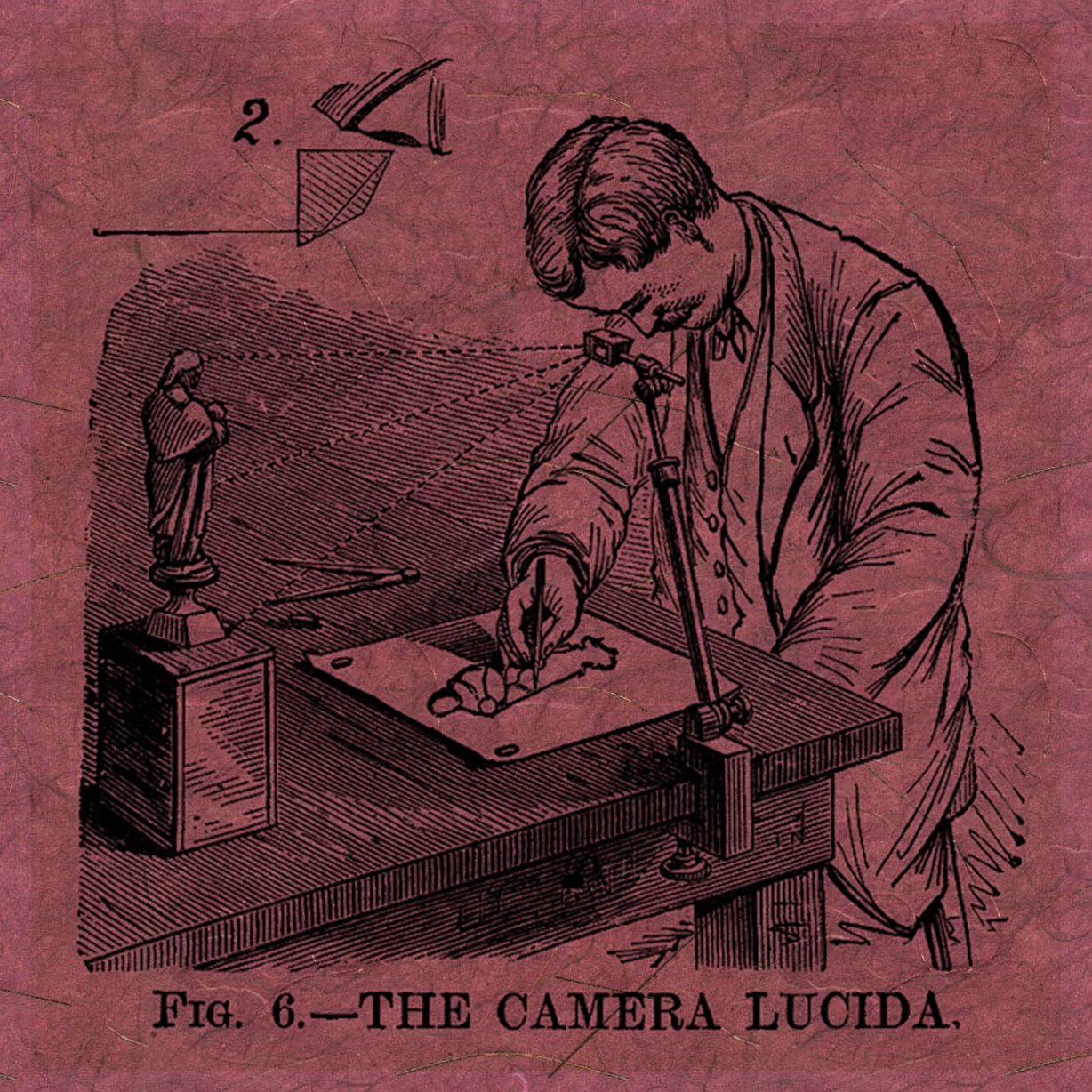
The Optical Bridge: The Camera Lucida
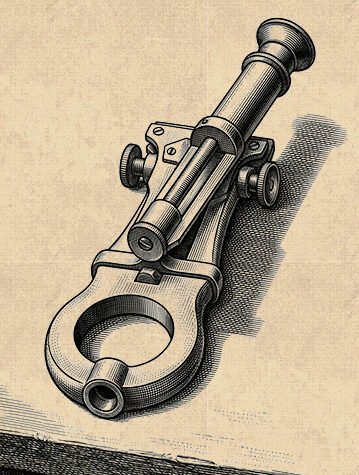
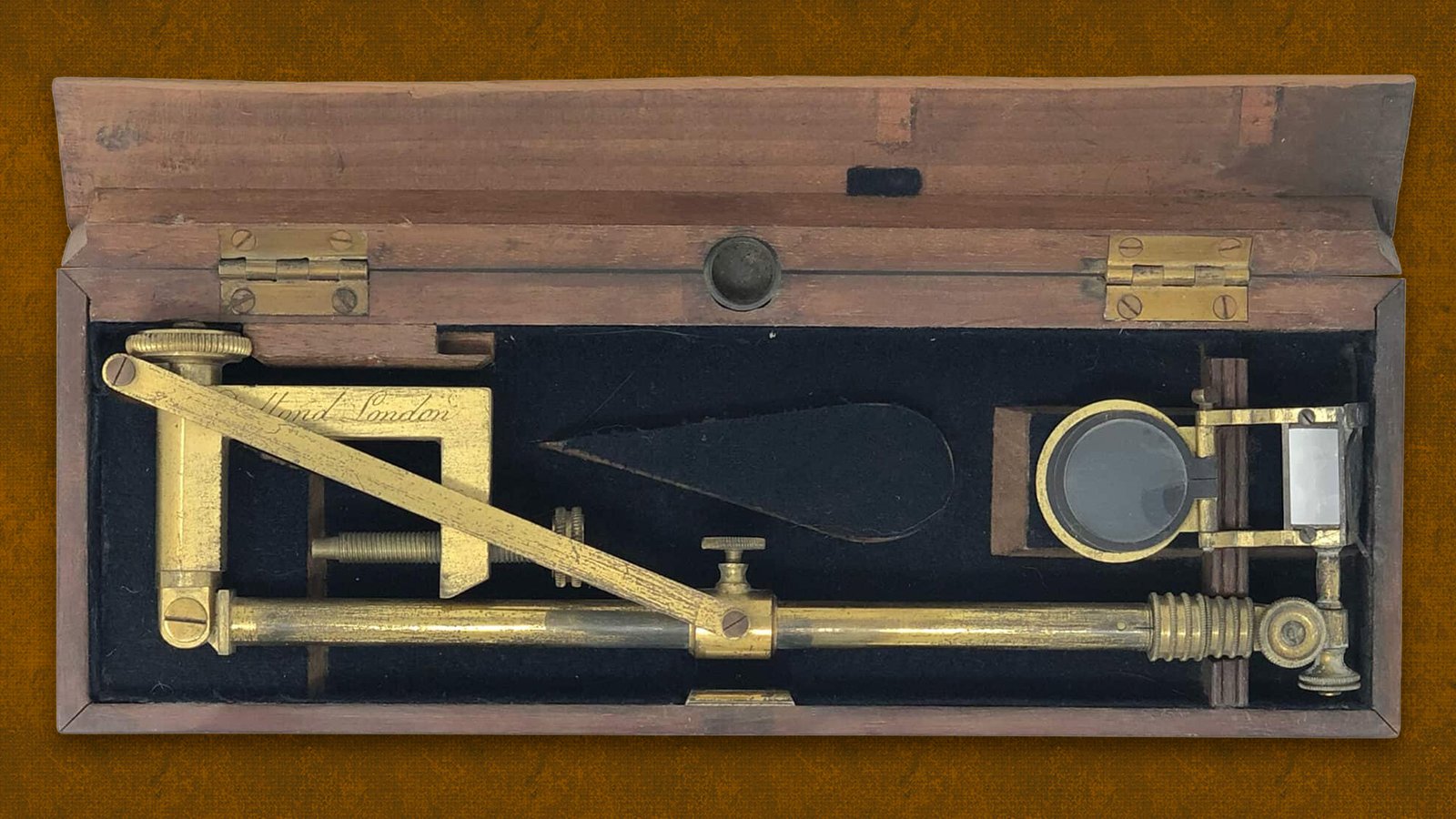
Jorge Geisse did not seek the shortcut, but rather the structure. Challenging commercial offerings, he designed and built his own optical device from an 80mm lens. This customized piece of engineering, more than a simple viewer, was a precision mechanism that fused lenses and micrometric adjustments.
The device allowed the artist to project the reality of a model onto that of the canvas or paper with mathematical fidelity, adjusting scales and vanishing points with architectural rigor.
Its use bears witness to how technology—reused and reinvented—can be fused with the hand to capture the essence of form before color intervenes.
Technical note: Inspired by William Hyde Wollaston’s 1806 patent, Geisse’s mechanism superimposed a “ghost image” onto the canvas, allowing him to capture realistic perspectives with an accuracy that only a master of optics could achieve.
From Earth to Studio: The Materials of His Art
Faithful to the tradition of the great masters he met during his time at the Istituto Centrale per il Restauro and the Uffizi Academy, Jorge rejected industrial paint. For him, the painting was born in the gathering.
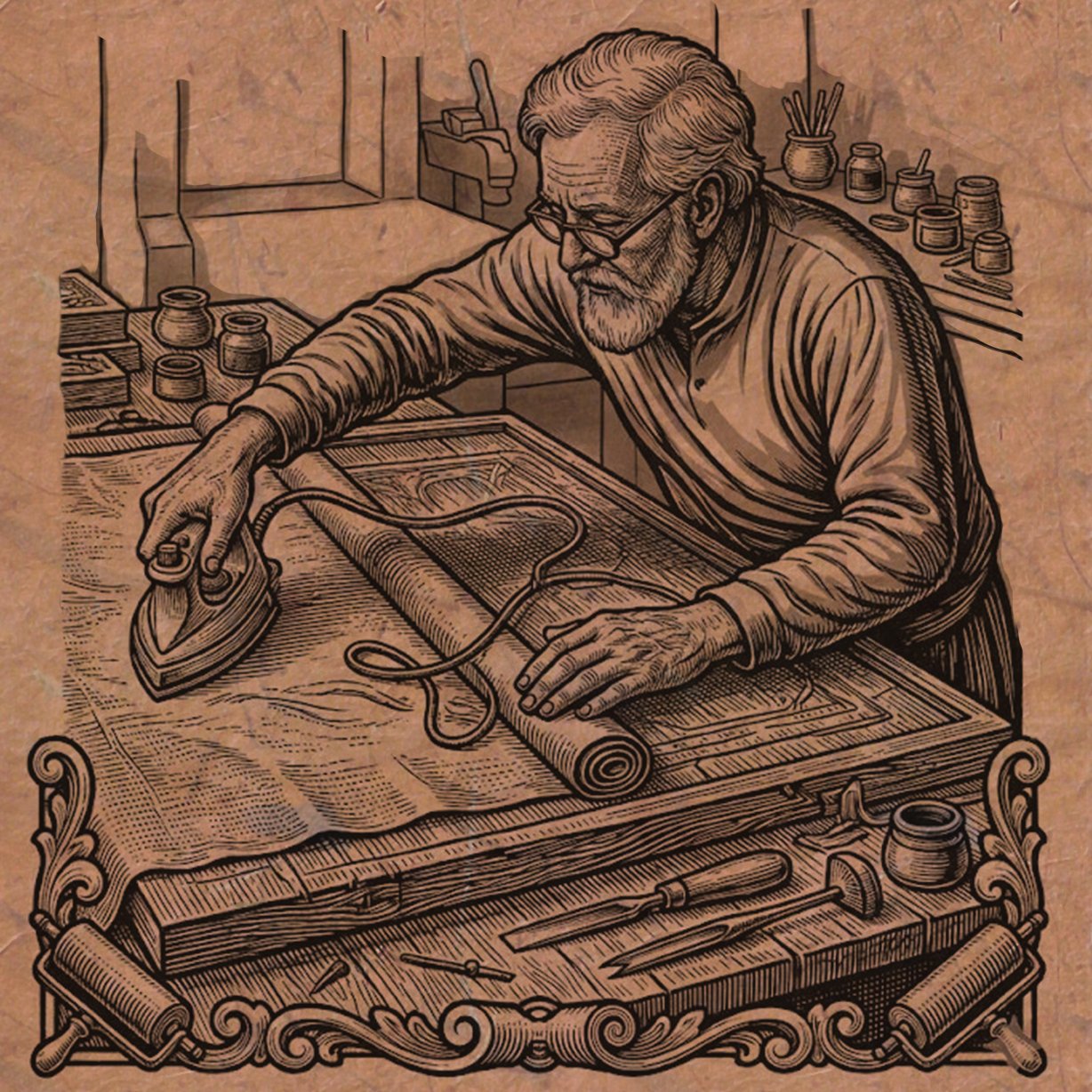
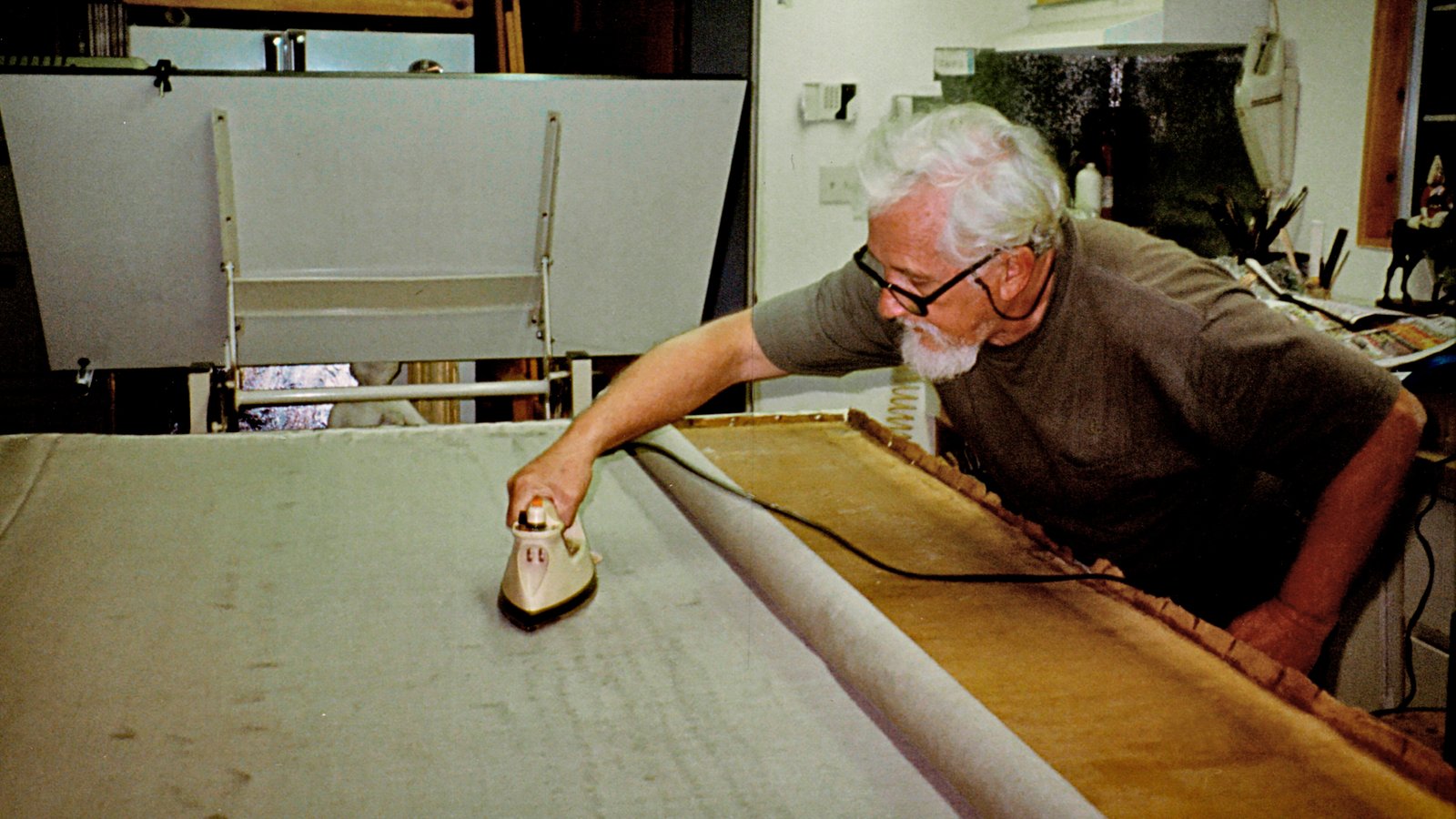
Organic supports: His canvases and wooden panels were prepared with rabbit-skin glue and gesso primers, following centennial protocols. This technique, which requires 24 hours of hydration and controlled water-bath cooking (without exceeding 60°C), guarantees a living, elastic surface capable of resisting the passage of centuries.
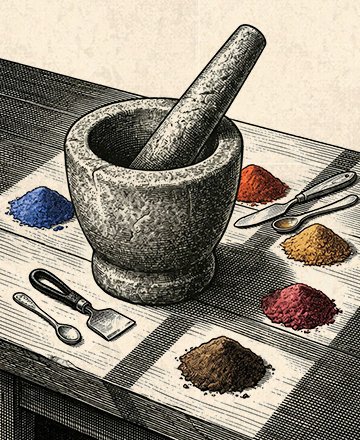
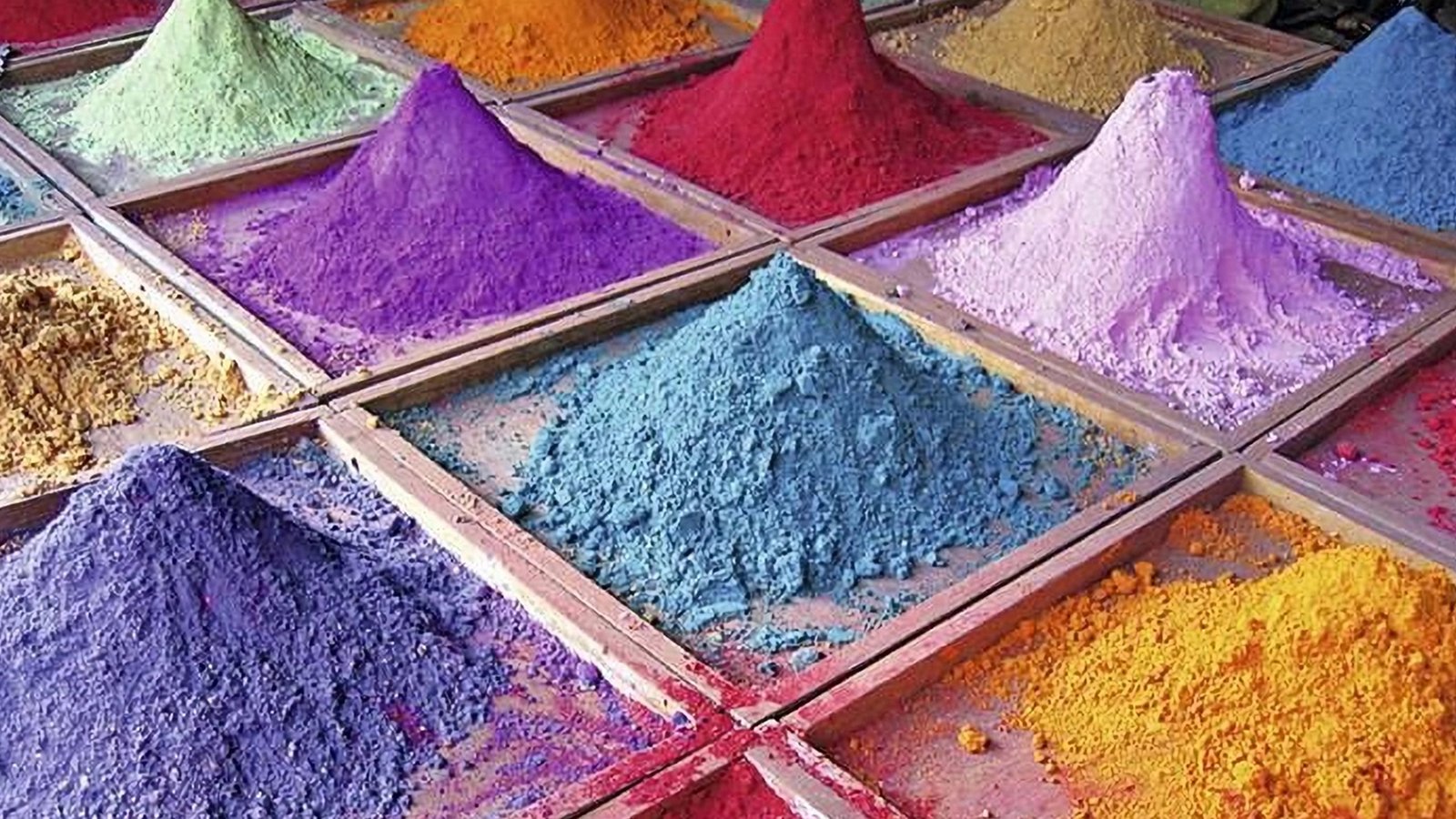
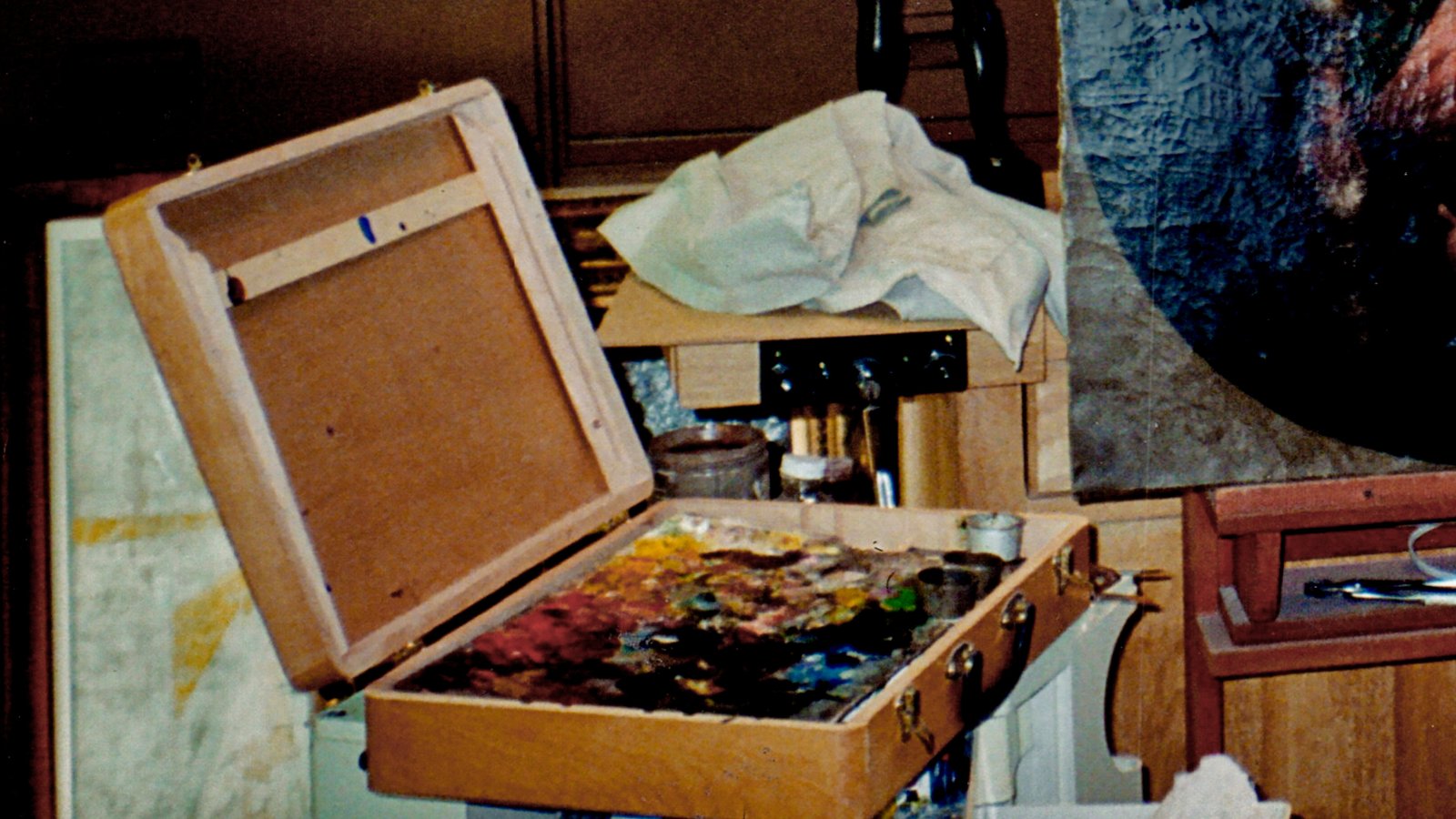
Pigments and resins: During his travels, he collected unique earths and minerals that he later transformed into artisanal oils. Every color on his palette has a geographical origin and a chromatic vibration that mass production cannot replicate.
Maturation and the Golden Patina
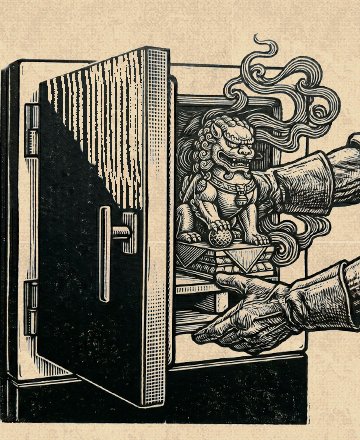
If time is another painter, Jorge decided to seat it at his workbench. To dialogue with the centuries, he built a sophisticated metal cabinet lined with plaster. In this precision oven, he subjected his works to an accelerated maturation process using hot air coils at 248°F.
It was not a simulation, but a molecular consolidation of materials. This “baking” process granted the surface that coveted atmospheric golden glow and the visual depth normally achieved only after a hundred years of exposure.
Architecture of Detail
Creation of texture: Using small molds fixed to the artwork, Geisse built reliefs and high-volume brushstrokes, which he then refined with a spatula before colored varnish—applied in multiple layers—finally sealed the secret of his craft.
Localized thermodynamics: In areas of thick impasto, he used localized heat to dry fragments intermittently, achieving a controlled retraction of the paint.
Induced atmospheres: To emulate the passage of centuries in historical environments, he exposed the pieces to the smoke of burnt woods and animal fat resins, recreating the patina of candles and the atmosphere of the Italian churches where he worked as a restorer.
The Graphic Laboratory
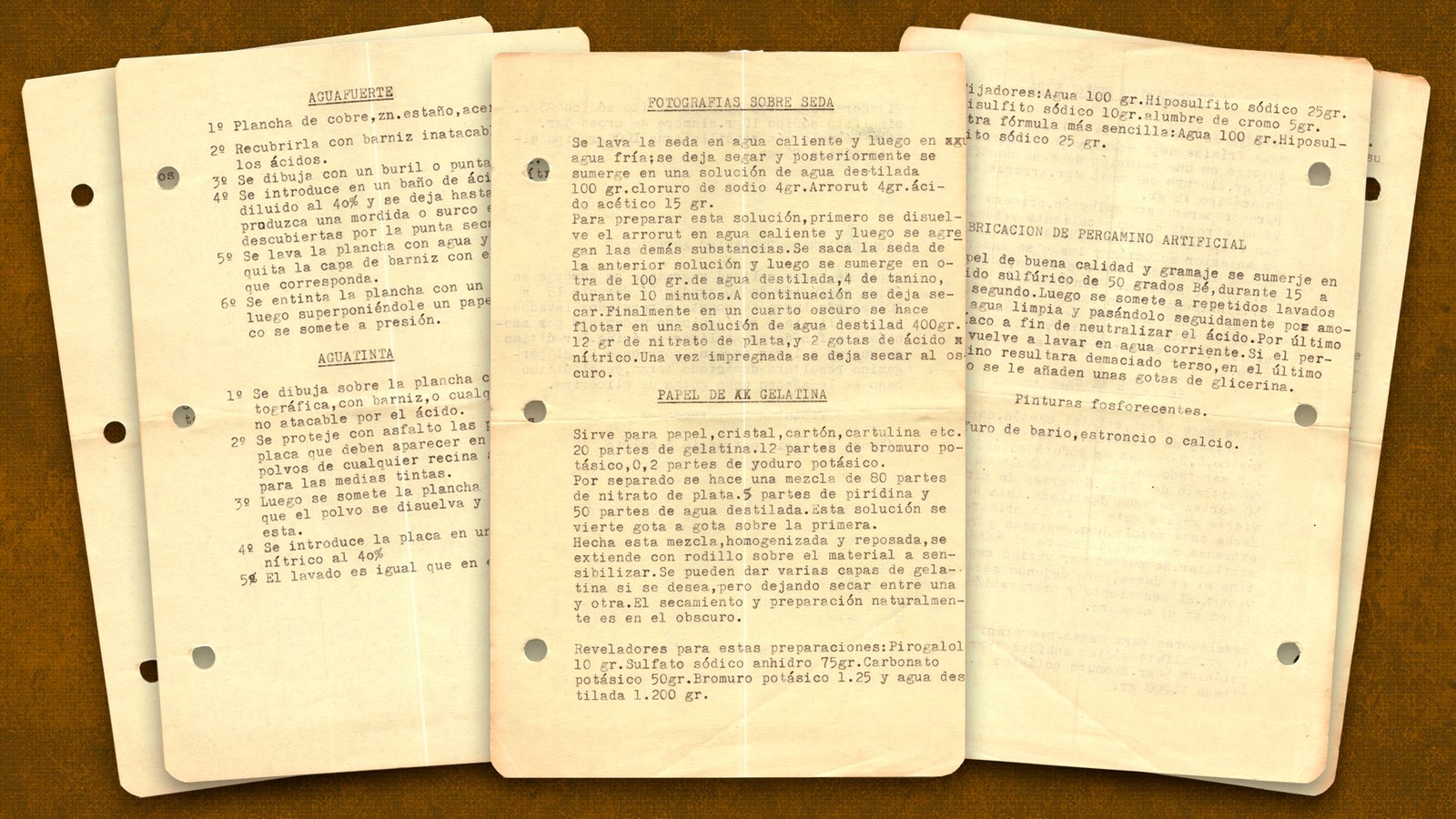
The studio was not only a painting studio, but a laboratory of graphic experimentation. Jorge Geisse developed his own protocols for silk image transfer, artificial parchment making, and electrolytic etching. His notes, written amidst the scent of developer and mordant acid, are the trace of an artist who needed to understand the physics of the image in order to liberate it.
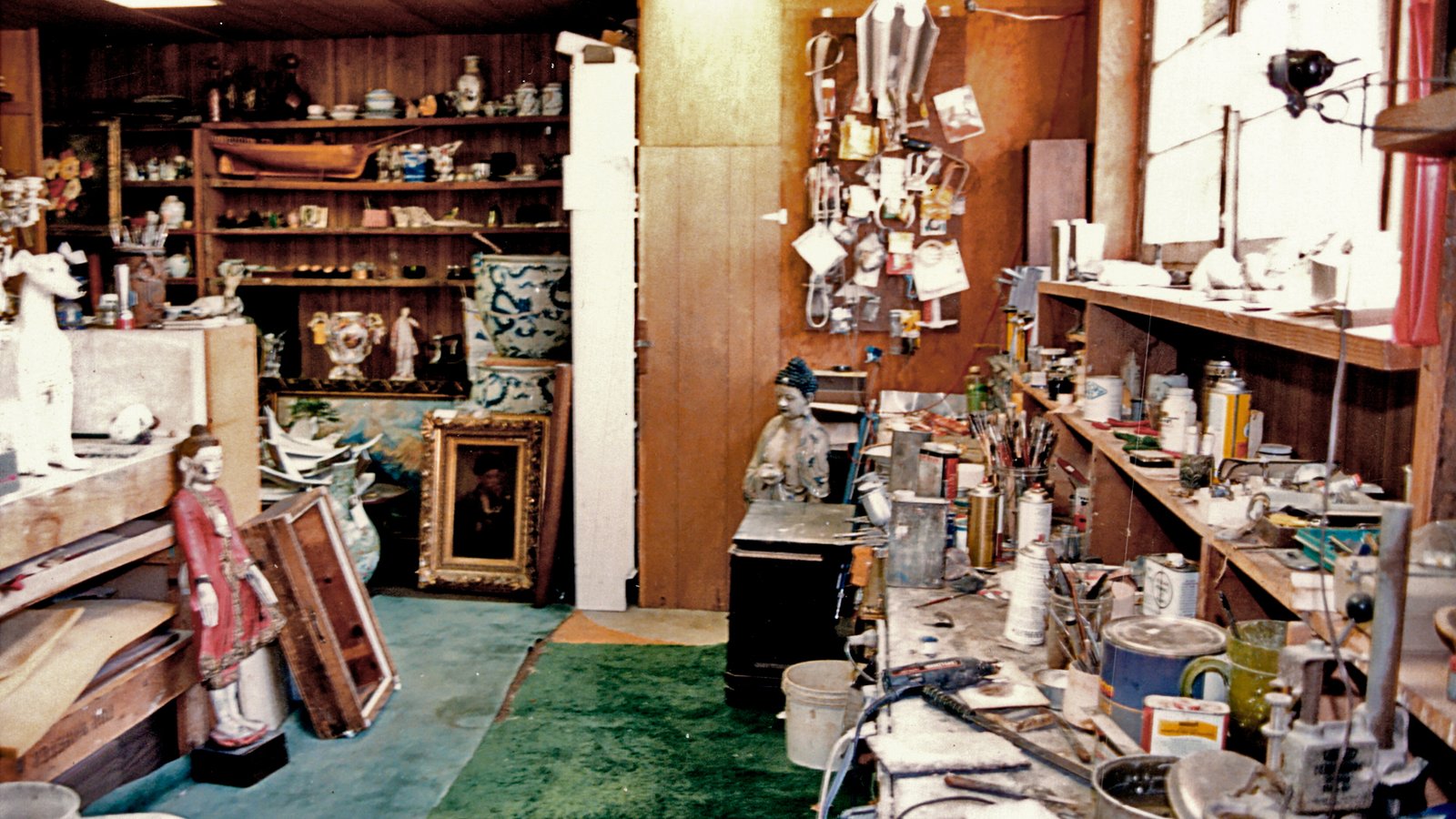
The Jorge Geisse Archive is located in Murrieta, CA, United States of America. Managed and represented by the Geisse Castrillón Family.
© 2026
Jorge Geisse Archive.
All rights reserved. No part of this work may be reproduced without express authorization from the family.